

The real test of Uganda’s flagship rural-transformation programme is not how much money reaches the parish, but how much productive capacity remains after the money has been spent
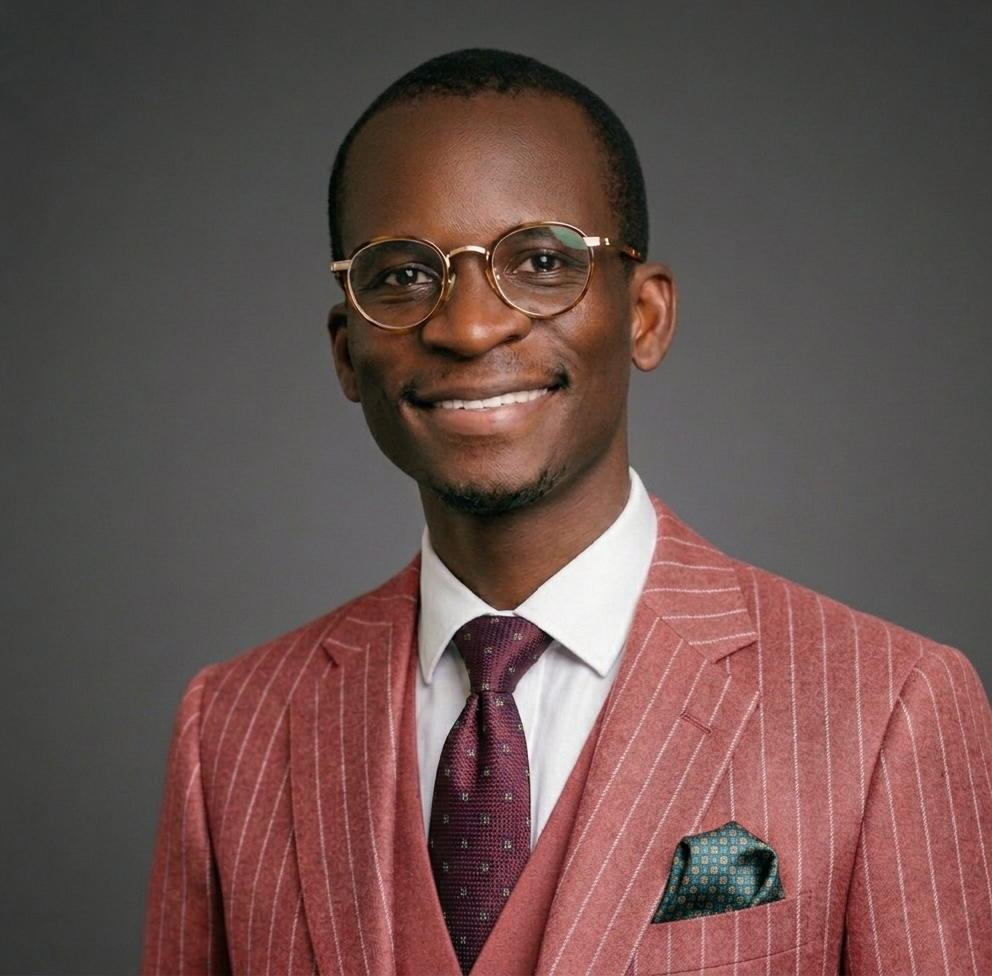
By Emmanuel Mihiingo Kaija
There is a powerful idea at the centre of Uganda’s Parish Development Model: if the state can take development planning, finance, agricultural support, enterprise development and social transformation closer to the household, then rural Ugandans who remain trapped in subsistence production can gradually enter a more productive and monetised economy. The official conception of the Parish Development Model is explicitly multi-sectoral, with the parish intended to become the centre of planning, implementation, supervision and accountability, while its objectives include increasing household incomes, strengthening financial inclusion, improving agricultural productivity and promoting commercialisation. The programme was launched in February 2022 with an ambition to transition millions of households from subsistence into the monetised economy, and the Parish Revolving Fund provides publicly managed financing to selected households. There is therefore a serious development philosophy behind PDM, and it would be intellectually lazy to dismiss the programme simply because implementation has encountered difficulties. But precisely because the ambition is so large, Uganda must ask a harder question: can money alone transform a rural economy? The answer is almost certainly no. Money can purchase seeds, livestock, equipment, inputs, transport, storage, training and other productive assets, but money cannot by itself create functioning markets, reliable extension services, roads, electricity, irrigation, storage, agricultural research, managerial discipline, financial literacy, collective organisation or entrepreneurial capacity. A loan can place capital into a household, but it cannot guarantee that the household will know what to produce, where to sell it, how to manage risk, how to keep records, how to negotiate prices, how to preserve its products or how to reinvest profits. This is the fundamental issue Uganda should now confront. PDM must become more than a financing programme. It must become a rural production system.
The original architecture of PDM actually recognises this broader reality. The programme is built around seven pillars covering agriculture and value-chain development, infrastructure and economic services, financial inclusion, social services, community mobilisation and mindset change, information management, and governance and administration. This is important because it means the intellectual weakness of PDM is not necessarily the programme’s formal design. The problem is the distance that can emerge between design and implementation. A policy can correctly identify seven necessary components while implementation concentrates disproportionately on the most visible component: money. Money is easy to announce. Money is easy to count. Money can be transferred through a financial institution and recorded in a transaction. Transformation is much harder to measure. If a parish receives funding, officials can report that the money was disbursed. If households receive loans, administrators can report the number of beneficiaries. But these figures do not tell us whether household productivity increased, whether incomes rose, whether enterprises survived, whether farmers gained access to profitable markets, whether debts were repaid, whether productive assets were accumulated or whether households became less vulnerable to economic shocks. Disbursement is an administrative event; transformation is an economic process. Uganda must therefore resist the temptation to measure PDM primarily through the amount of money released or the number of people reached. The central performance indicator should be whether households become sustainably more productive and economically resilient.
This distinction becomes especially important because rural poverty is rarely caused by a single shortage of cash. A farmer may have access to capital and still remain poor because production is too low, input prices are too high, transport costs are excessive, markets are unreliable, post-harvest losses are significant, storage is inadequate or prices collapse at harvest time. A livestock farmer may receive money to acquire animals but lack veterinary services, improved breeds, pasture management, water infrastructure or reliable markets. A poultry enterprise may receive capital but collapse because of disease, expensive feed or weak market access. A small processor may acquire equipment but discover that electricity supply is unreliable or that the local market is too small to support the business. These examples demonstrate a basic principle of development economics: capital is productive only when it operates inside a productive system. Give capital to a weak system and the capital may simply circulate temporarily before disappearing. Connect capital to skills, infrastructure, technology, markets, institutions and information, and the same amount of money can potentially produce a much larger economic return. The question for PDM should therefore not be, “How much money did the household receive?” but, “What productive system did the household enter after receiving the money?”
This is where agriculture becomes central. Uganda cannot transform rural households without transforming the economics of agricultural production. A large proportion of rural households depend directly or indirectly on agriculture, but agricultural transformation requires much more than encouraging farmers to produce more. Producing more without a market can create a glut. Producing a valuable crop without storage can expose farmers to distress sales. Producing livestock without veterinary services can destroy household capital through disease. Producing perishable commodities without cold-chain infrastructure can turn increased production into increased losses. Therefore, the PDM agricultural strategy must be organised around value chains rather than isolated households. The farmer should not be viewed simply as a producer. The farmer is part of a chain involving input suppliers, extension workers, aggregators, transporters, processors, wholesalers, retailers, financial institutions and consumers. If one part of that chain is weak, the farmer’s income can remain low regardless of how much capital is injected at the beginning. The real objective should therefore be to make the parish economically connected to wider regional and national markets.
The question of markets is particularly important because rural development programmes sometimes assume that once households have money and productive assets, economic activity will naturally expand. It does not always happen that way. Markets must be organised. Buyers must exist. Quality standards must be understood. Information about prices must circulate. Transport must be affordable. Producers must have sufficient bargaining power. Aggregation must reduce transaction costs. Processing must extend shelf life and increase value. Financial institutions must understand agricultural risk. If ten thousand farmers suddenly produce the same commodity without coordinated market planning, the result may be falling prices rather than rising incomes. This is why PDM should invest more heavily in market intelligence. Parish-level development planning should know what products have realistic demand, which markets are accessible, what production volumes are required, what quality standards apply, what seasons generate the best prices and what processing opportunities exist. Rural transformation requires the farmer to move from asking, “What can I produce?” to asking, “What can I produce profitably, consistently and competitively?”
There is another issue that deserves much greater attention: the uniformity of PDM financing. Uganda’s Parliamentary Finance Committee warned in April 2026 that the uniform allocation of Shs100 million to each parish risks undermining effectiveness because parishes differ in population, land area and poverty levels. This is a crucial observation. A parish is an administrative unit, but administrative equality does not necessarily mean economic equality. One parish may have thousands of households and another substantially fewer. One may have fertile land, reliable rainfall and good road access. Another may face drought, poor soils, long distances to markets or severe infrastructure deficits. One may be close to a major town while another may be geographically isolated. Treating these different economic ecosystems as though they require precisely the same allocation can create inefficiency. The correct principle should be equitable allocation rather than identical allocation. Equality says every parish receives the same amount. Equity asks what each parish requires to overcome its particular structural constraints. A rural parish with high population density and strong market access may need different financing from a sparsely populated parish experiencing severe climate vulnerability. Uganda should therefore increasingly move toward formula-based financing that considers population, poverty, production potential, infrastructure gaps, climate risk, market access and demonstrated performance.
The monitoring question is equally serious. In March 2026, Parliament’s Public Accounts Committee raised concerns about delays in rolling out the Parish Development Management Information System, which is intended to track beneficiaries, disbursements and programme impact across Uganda’s more than 10,000 parishes. This should not be treated as a minor technological issue. Data is the nervous system of a large public programme. Without reliable data, government cannot know precisely who received support, what they invested in, whether the enterprise survived, whether loans are being repaid, whether certain groups are systematically excluded or whether some parishes are consistently performing better than others. If Uganda is spending billions of shillings on rural transformation, it should be able to produce a parish-by-parish evidence base showing what is happening. How many households entered the programme? How many remain economically active after one year? What is the average change in household income? What percentage of enterprises survive? What are the repayment rates? Which commodities are most successful? Which interventions fail most frequently? What are the reasons for failure? Which districts have the strongest results? Which districts require additional support? These are not bureaucratic questions. They are the foundation of rational public policy.
PDM therefore needs a national rural transformation dashboard that goes beyond disbursement statistics. Imagine being able to examine every parish and see the number of supported households, the enterprises financed, the value of production generated, the markets accessed, repayment performance, employment created, infrastructure constraints, extension coverage and household-income trends. Such a system would transform PDM from a programme that government administers into a programme that government can continuously learn from. It would also allow policymakers to identify patterns. If poultry enterprises repeatedly fail in a particular region, perhaps disease control or feed costs are the problem. If maize farmers consistently experience losses, perhaps storage and market timing are the problem. If livestock projects perform better where veterinary services are available, then veterinary investment becomes an obvious complementary intervention. Data should not merely tell government what happened; it should tell government what to do next.
The problem of mindset also deserves careful treatment. PDM includes community mobilisation and mindset change as one of its pillars. The language of “mindset change” can sometimes become vague, but there is a legitimate economic issue underneath it. Moving from subsistence production toward commercial production requires changes in behaviour. A household that produces primarily for consumption must learn to think about production schedules, costs, markets, savings, reinvestment, risk and profit. But mindset cannot be transformed through speeches alone. Behaviour follows incentives and institutions. Telling a farmer to commercialise while providing no reliable market does not create commercialisation. Telling a household to save while income remains highly volatile does not create savings. Telling farmers to produce more without reducing post-harvest losses can increase waste. Therefore, mindset programmes must be connected to real economic opportunities. People are more likely to adopt commercial practices when commercial activity actually produces measurable benefits. Economic behaviour changes when the surrounding economic system rewards that behaviour.
This is why financial literacy should become a central part of PDM. Receiving a loan is not the same as knowing how to manage debt. A household may understand how to spend money without understanding how to calculate profit. It may understand revenue without understanding cash flow. It may purchase productive assets without calculating depreciation, maintenance or replacement costs. It may generate income without separating business finances from household consumption. It may repay one loan by borrowing elsewhere, creating the appearance of success while accumulating vulnerability. PDM should therefore support basic enterprise accounting, record-keeping, budgeting, savings, pricing, debt management and risk analysis. These skills need not require university-level economics. They can be taught through practical, local-language programmes built around the actual businesses people operate. A million-shilling loan placed in the hands of an unprepared entrepreneur can disappear; a smaller amount placed in the hands of a disciplined entrepreneur with market access can become the foundation of a growing enterprise.
The role of SACCOs also requires serious attention. PDM’s financial-inclusion architecture uses parish-level structures to connect rural households to financial services. This creates an opportunity to build lasting local financial institutions rather than treating the programme as a sequence of government disbursements. But the sustainability of these institutions depends on governance, transparency, credit discipline, record-keeping, member participation and professional management. A SACCO should not become merely a channel through which government money passes. It should gradually become a functioning community financial institution capable of mobilising savings, assessing creditworthiness, supporting productive investment and recycling capital. The distinction is fundamental. If PDM creates dependency on repeated government injections, it may relieve poverty temporarily without creating durable financial autonomy. If it helps build institutions that mobilise local savings and finance productive activity over many years, the impact could be much deeper. The ultimate success of a revolving fund is not that government keeps putting money into it; it is that the fund becomes increasingly capable of revolving locally generated capital.
This raises the issue of sustainability. Every government programme should eventually ask what happens when the original public funding declines. PDM cannot remain indefinitely dependent upon large annual transfers if the objective is to create an economically self-sustaining rural system. The transition should therefore be from public capital to productive capital, from government funding to household savings, from grants or subsidised financing to commercially viable enterprises, and from isolated beneficiaries to functioning producer organisations. Government should provide the initial catalyst, but the economic system must eventually generate its own momentum. This is particularly important because public budgets face competing demands. Uganda must finance health, education, infrastructure, security, energy, social protection and many other priorities. Rural transformation cannot depend indefinitely on one programme receiving large injections of public money. The programme must eventually generate enough economic activity that households and local institutions become less dependent on central transfers.
Climate change makes this challenge even more urgent. Rural Uganda’s economy remains highly exposed to weather conditions, and agriculture can be severely affected by droughts, floods, pests and changing rainfall patterns. FEWS NET’s 2026 assessment continues to identify food-security concerns among poor households and refugees in parts of Uganda, particularly Karamoja. A rural-finance programme that ignores climate risk can unintentionally create debt without resilience. If a household borrows money to establish an enterprise and a climate shock destroys the productive asset, the household may remain responsible for repayment despite having lost its income source. PDM therefore needs climate-smart finance, appropriate insurance mechanisms, water management, drought-resistant production systems, diversified livelihoods and contingency planning. Rural transformation in the twenty-first century cannot be built around the assumption that historical weather patterns will continue unchanged. A productive household is not merely one that earns money in a good year; it is one capable of surviving a bad year without falling back into extreme vulnerability.
Infrastructure is another decisive factor. Government’s own PDM framework recognises infrastructure and economic services as a major pillar. But infrastructure must be understood economically rather than merely physically. A road is valuable because it lowers transport costs and connects producers to markets. Electricity is valuable because it enables processing, refrigeration, irrigation, communications and enterprise activity. Water infrastructure is valuable because it reduces production risk and supports households and businesses. Digital connectivity is valuable because it improves access to financial services, market information and administrative systems. A PDM enterprise therefore needs to be considered within its infrastructure environment. Financing a milk-processing business without reliable electricity or a cold chain is not a complete intervention. Financing a farmer in an isolated area without affordable transport to markets is incomplete. Giving a rural entrepreneur capital without digital connectivity may restrict access to information and financial services. The rural economy is a network, and development interventions must strengthen the network rather than merely finance individual nodes.
This is also why PDM should be more closely connected to Uganda’s industrialisation agenda. Rural transformation cannot stop at increasing farm output. The deeper objective should be to build rural value addition. Coffee can be processed. Milk can become yoghurt, cheese and other products. Fruits can become juice, dried products or concentrates. Cassava can be transformed into flour and industrial inputs. Cotton can feed textile production. Hides can enter leather value chains. Oilseeds can be processed. Grain can be milled and packaged. The more processing occurs near production areas, the more value can remain in rural economies. This creates jobs beyond farming: mechanics, electricians, accountants, transporters, processors, technicians, packaging workers, marketers and business managers. The rural transformation question should therefore become: how do we turn rural production into rural industry?
That shift would also change the meaning of employment. Rural development should not be interpreted as putting every household into farming indefinitely. Agriculture can become the foundation of a diversified rural economy containing processing, logistics, manufacturing, services and digital businesses. A young person in a rural parish should eventually have economic options beyond subsistence agriculture or migration to Kampala. There should be opportunities to repair agricultural machinery, operate a solar business, process food, provide veterinary services, manage digital records, transport goods, run a small manufacturing enterprise, offer financial services or work in a local processing facility. A transformed parish is not simply a parish with more farmers; it is a parish with a diversified productive economy.
The question of young people is therefore central. Uganda’s demographic structure means that rural transformation must create opportunities for a large and growing youth population. Young people should not be treated merely as beneficiaries of government programmes. They should be treated as economic actors. PDM should encourage youth-led enterprises, agricultural technology, digital services, processing businesses and rural manufacturing. But youth entrepreneurship programmes should avoid the common mistake of equating entrepreneurship with simply giving young people small amounts of money. Entrepreneurship requires markets, skills, mentorship, networks, technology and the ability to learn from failure. Government can help create an ecosystem in which young entrepreneurs have access to productive resources, but the businesses must eventually compete on their economic merits. The objective should be to create entrepreneurs, not permanent beneficiaries.
Women also require specific attention. PDM’s design includes a 30 percent target for women, alongside allocations for youth, persons with disabilities, older persons and men/general community members. But numerical inclusion is only the beginning. Women’s economic participation is affected by access to land, control over income, household responsibilities, financial services, markets, technology and decision-making. If women receive loans but lack control over the resulting enterprise or income, the programme’s intended effect may be weakened. PDM should therefore examine not merely how many women receive financing but whether women gain meaningful control over productive assets, enterprise decisions, income and reinvestment. Inclusion must be measured by economic agency, not only by beneficiary numbers.
Another important issue is local government capacity. PDM places enormous responsibility at the parish level, but decentralised implementation requires competent personnel. Parish chiefs, agricultural officers, community development officers, SACCO managers and local leaders need appropriate training and clear responsibilities. If local officials are expected to identify beneficiaries, supervise enterprises, collect information, monitor implementation and support community mobilisation without adequate resources or technical capacity, implementation quality will suffer. Decentralisation does not mean simply moving responsibility downward. It means moving responsibility downward together with authority, information, skills, resources and accountability. A weak local institution cannot become strong merely because a national programme assigns it more duties.
There is also a governance question that cannot be avoided. Any programme distributing substantial public resources creates opportunities for political influence, favouritism and elite capture. Beneficiary selection must therefore be transparent. Communities should understand eligibility criteria. Financial records should be auditable. Conflicts of interest should be declared. Local officials should not control beneficiary selection without oversight. Public reporting should identify how resources are distributed. Grievance mechanisms should exist for people who believe they were excluded unfairly. These safeguards are not bureaucratic obstacles to development. They are what protect development programmes from losing legitimacy. When citizens believe that public resources are distributed according to political connections rather than economic need, participation and trust decline. A rural transformation programme must be economically productive and institutionally credible.
The need for stronger monitoring is particularly clear given Parliament’s concerns about the delayed PDM monitoring system. Uganda should treat this as a strategic governance issue rather than a technical inconvenience. A programme operating across more than 10,000 parishes cannot be effectively managed through paper-based reporting and periodic political visits alone. Digital systems can create a national evidence architecture linking household registration, beneficiary identification, financial transactions, enterprise performance and programme outcomes. But technology must be accompanied by verification. A database can contain inaccurate information if nobody checks the information. Digitalisation should therefore be combined with community verification, independent audits, random field assessments and outcome measurement. A digital record is not automatically a true record.
The programme also needs a culture of learning. Public programmes often become defensive when evaluation identifies weaknesses because criticism is interpreted as an attack on the programme itself. That is dangerous. A programme as large and ambitious as PDM should expect some interventions to fail. The important question is whether government learns quickly enough to redesign them. If one type of enterprise repeatedly fails, stop financing it or change the model. If a particular district performs exceptionally well, study why. If some SACCOs achieve high repayment and others perform poorly, investigate the institutional differences. If certain agricultural value chains produce stronger household incomes, expand them where ecological and market conditions permit. The best development programme is not the one that never admits failure; it is the one that learns from failure faster than failure becomes expensive.
Uganda should therefore consider establishing a formal PDM Learning and Innovation Programme within the broader monitoring architecture. Universities, research institutions, agricultural organisations, financial institutions and local governments could participate in rigorous evaluation of different approaches. Researchers could study which enterprises generate sustainable incomes, which financing structures produce high repayment, which infrastructure investments generate the largest economic multiplier and which forms of extension services produce measurable productivity gains. This would transform PDM from a conventional government programme into a national laboratory for rural economic transformation. The knowledge generated would have value beyond Uganda because many African countriess face the same challenge: how to move households from low-productivity subsistence activity into diversified, commercially connected economies.
The ultimate objective should therefore be larger than household consumption. A household that receives money and uses it to meet immediate expenses may experience short-term relief, but that is not the same as structural transformation. Transformation occurs when income-producing capacity increases. A household acquires productive assets, develops skills, enters markets, generates surplus income, saves, reinvests, expands production, creates employment and becomes more resilient to shocks. That process may take years. Government must therefore resist the political temptation to demand immediate spectacular results from every intervention. At the same time, patience cannot become an excuse for poor performance. The correct approach is long-term ambition combined with short-term measurement. Every year should produce measurable evidence that households and enterprises are moving toward greater productivity.
This brings us to the central proposition of this article: money is a catalyst, not a transformation strategy. Capital can start an enterprise, but institutions sustain it. Credit can finance production, but markets determine whether production becomes income. Seeds can increase yields, but extension services determine whether farmers know how to use them effectively. Livestock can create wealth, but veterinary systems help protect that wealth. Roads can reduce costs, but functioning markets determine whether lower costs translate into higher producer incomes. Electricity can enable processing, but entrepreneurship determines whether businesses emerge. Training can provide knowledge, but management discipline turns knowledge into performance. Government funding can initiate development, but local economic institutions must eventually sustain it.
Uganda should therefore resist two opposite errors. The first is to dismiss PDM entirely because it has implementation challenges. That would waste an important opportunity to build a more integrated rural-development system. The second is to defend PDM simply because it has received substantial public funding. Public investment does not automatically prove public success. The appropriate position is neither blind criticism nor blind praise. It is evidence-based reform. The programme should be strengthened where evidence shows that it works, redesigned where implementation is weak and discontinued where interventions consistently fail to produce meaningful outcomes. Public money should follow evidence.
There is also a deeper philosophical question about development that Uganda should confront. For decades, many African development programmes have been built around the distribution of resources to poor households. That is understandable because immediate poverty requires immediate assistance. But long-term transformation requires a transition from distribution to production. The state should help households acquire the capabilities required to generate sustainable income. It should create the infrastructure and institutional environment in which productive activity becomes profitable. It should reduce barriers that prevent rural businesses from scaling. It should connect producers to domestic, regional and international markets. It should support agricultural research and technology. It should make finance accessible without creating unsustainable debt. It should strengthen local institutions. In short, government should move from asking, “How much can we give the household?” to asking, “What must we build so the household can produce more value?”
This distinction is especially relevant to President Museveni’s broader call for a transition from subsistence to a money economy. Recent reporting on Uganda’s 2026/27 budget indicates continued emphasis on moving households toward monetised economic activity. The objective is economically sensible, but monetisation itself should not become the final measure of transformation. A household can participate in the money economy and still remain economically fragile. It can sell produce for cash and immediately spend the proceeds on consumption. It can borrow money and repay debt without accumulating assets. It can increase transactions without increasing productivity. True transformation requires surplus generation and capital accumulation. Rural households need to reach a point where part of what they produce can be reinvested into better tools, improved technology, education, storage, land productivity, processing or business expansion. That is how household-level economic activity becomes national economic transformation.
The future of PDM should therefore be judged through a much more demanding set of questions. Are household incomes rising sustainably? Are productive assets increasing? Are agricultural yields improving? Are enterprises surviving beyond their first year? Are repayment rates healthy? Are savings increasing? Are local value chains becoming stronger? Are young people finding productive employment? Are women gaining greater economic agency? Are post-harvest losses declining? Are farmers obtaining better prices? Are rural processing businesses expanding? Are parishes becoming more connected to markets? Are households becoming more resilient to climate shocks? Are public resources being distributed transparently? Are successful models being replicated? These are the indicators of transformation. The number of cheques, transfers or loans issued is only the beginning of the story.
The greatest opportunity of PDM is that Uganda has chosen the parish as a unit of transformation rather than attempting to design every intervention exclusively from Kampala. That principle deserves serious attention. Development is ultimately experienced locally. The national budget is negotiated in the capital, but poverty is experienced in households. Policies are written nationally, but farmers confront markets locally. Agricultural programmes are designed centrally, but crops are planted in villages. Health policies are developed nationally, but patients walk into local facilities. Education policy is national, but children learn in particular classrooms. If the parish can genuinely become a functional unit of economic planning, Uganda could develop a much more granular model of development in which local economies are understood according to their specific resources, constraints and opportunities.
But the parish must become more than an administrative boundary. It must become an economic ecosystem. A successful parish should eventually contain productive households, functioning financial institutions, agricultural services, local enterprises, market connections, infrastructure, information systems, social services and accountable leadership. The parish should know what it produces, what it consumes, what it imports, what it can process, what its infrastructure gaps are and which economic opportunities are most realistic. In other words, the parish should become a unit of economic intelligence. That would make PDM much more than a government financing scheme. It would make it an institutional framework for rural transformation.
The final question is therefore not whether Uganda should spend money on rural households. Of course, it should. The question is what that money is supposed to accomplish. If the objective is temporary relief, then money transfers may be sufficient. If the objective is structural transformation, they are not. Uganda must build the productive architecture around the money: markets, roads, electricity, water, agricultural research, extension, financial literacy, digital information, storage, processing, entrepreneurship, skills, governance and institutions. Money must enter a system capable of multiplying its value.
PDM can therefore become one of Uganda’s most consequential development experiments, but only if the country refuses to confuse financial distribution with economic transformation. The programme’s own seven-pillar design already recognises that rural transformation requires much more than finance. The challenge now is implementation: making the pillars work together rather than allowing the financing component to dominate the public imagination. Parliament’s concerns about monitoring delays and the uniform funding structure should be treated not as reasons to abandon the model but as reasons to improve it. Uganda should use the evidence emerging from implementation to redesign the programme continuously.
The deepest lesson is simple. You cannot finance your way out of structural poverty. You have to build your way out of it. You build productive households. You build markets. You build infrastructure. You build skills. You build financial institutions. You build value chains. You build local industries. You build reliable information systems. You build accountability. You build resilience. And above all, you build the capacity of citizens to generate and retain economic value.
PDM should therefore not be remembered merely as the programme through which government sent money to Uganda’s parishes. Its historical significance will ultimately depend on whether it helped create something much more durable: rural Ugandan communities capable of producing wealth, managing capital, entering markets, creating employment, surviving economic shocks and generating their own development momentum.
That is the real test.
Not how much money was distributed.
Not how many beneficiaries were registered.
Not how many launches were held.
Not how many reports were produced.
But whether, ten years from now, the rural household that once depended almost entirely on subsistence production has become a productive economic enterprise capable of generating income, accumulating assets, employing others and investing in the future.
Money can open the door. But only productive capacity can take a community through it.
