

19 generals, institutional renewal and the future of Uganda’s military leadership
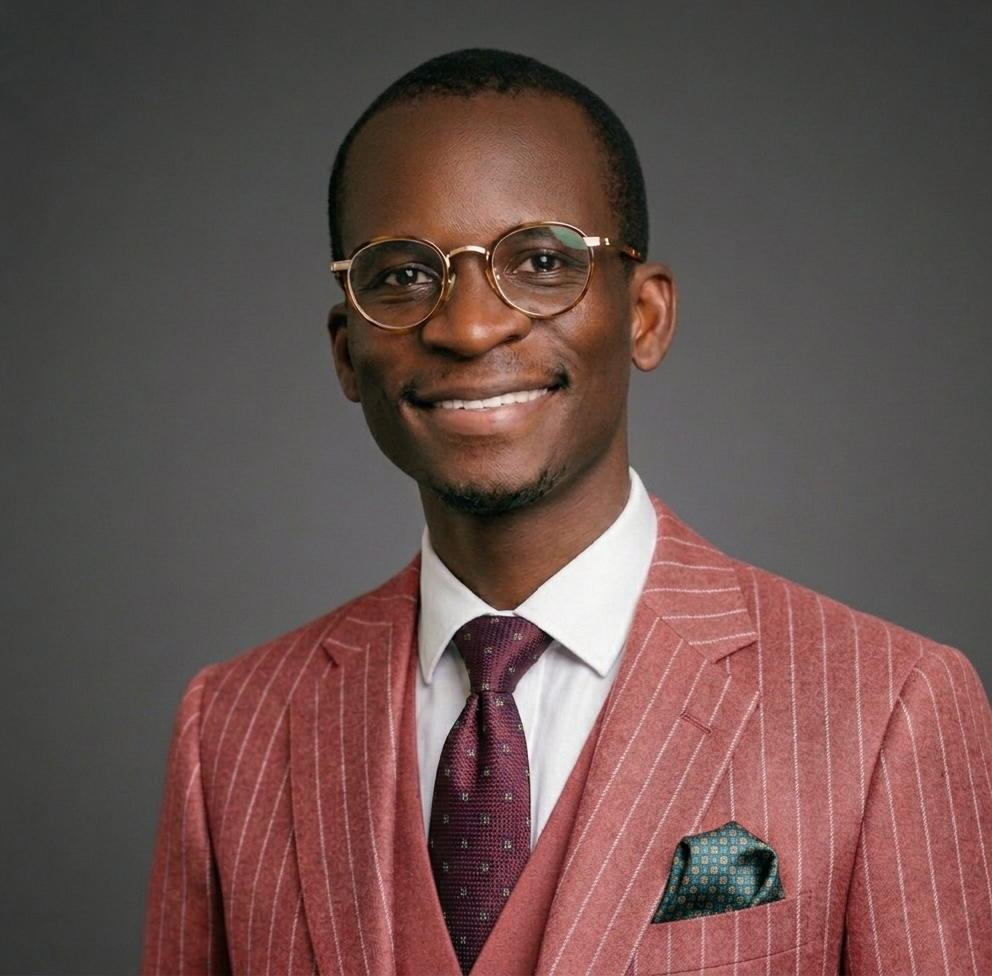
By Emmanuel Mihiingo Kaija
Are not there moments in the life of a military institution when personnel changes become more significant than the names appearing on the retirement list? Uganda is now approaching one of those moments. The Uganda Peoples’ Defence Forces (UPDF) has confirmed the retirement of 19 general officers as part of a wider retirement exercise affecting personnel across the military hierarchy, from generals to privates, with reporting indicating that 1,591 personnel are scheduled to leave active service during the current exercise. Among the senior officers associated with this transition is Gen. Edward Katumba Wamala, a former Chief of Defence Forces who has since served in civilian government. On the surface, this is an administrative process: officers reach retirement, documentation is completed, benefits are processed and new generations of personnel assume responsibilities. But institutions should never be understood only through their paperwork. Behind every retirement is a question about succession; behind succession is a question about institutional memory; and behind institutional memory is a question about whether an organization can renew itself without losing the accumulated experience of previous generations. The UPDF has existed since 1981 and has subsequently evolved from a guerrilla-derived force into a national military institution with domestic responsibilities, regional deployments, international peace-support experience and increasingly sophisticated command structures. The departure of a significant group of senior officers therefore provides Uganda with an opportunity to examine not merely who is leaving, but what kind of military institution is being handed to those who remain. The most important question is not whether Uganda needs younger generals. Every institution needs renewal. The deeper question is whether the transition from one generation of commanders to another is being managed in a manner that preserves professionalism, institutional memory, merit, strategic competence and confidence in the continuity of the armed forces.
Retirement is often discussed as though it represents the end of usefulness. That is a mistake. A military officer may retire from active command without retiring from professional knowledge. Generals accumulate decades of experience in command, administration, military education, peace-support operations, strategic planning, logistics, personnel management and crisis decision-making. Some have experienced periods of conflict that younger officers know only through textbooks or institutional records. Others have participated in Uganda’s regional security engagements and international peace-support missions. The challenge for the UPDF, therefore, is to distinguish between retirement from active service and retirement from institutional memory. If experienced officers simply leave the system and their knowledge disappears with them, the institution loses part of its historical archive. If, however, retirement is connected to systematic documentation, mentoring, professional education and veterans’ engagement, then succession can actually strengthen the organization. This is why the retirement of 19 generals should be viewed as an institutional knowledge-management event as much as a personnel event. The question should be: what lessons accumulated by these officers over decades will remain accessible to the officers who now assume greater responsibility? A military that knows how to recruit and promote but does not know how to preserve institutional memory can repeatedly relearn the same lessons at considerable cost.
The UPDF itself has recognized the importance of managing the transition of personnel into retirement. Its official retirement communications have emphasized prudent management of retirement benefits and preparation for life after active service. That is important because a professional military is responsible not only for its personnel while they are serving but also for how they leave the institution. Retirement policy is therefore part of military professionalism. Officers who have served the state for decades should be able to transition into civilian life with dignity, predictable benefits and opportunities to continue contributing to society. But the question can be taken further. What if Uganda deliberately treated retired senior officers as part of a national reservoir of professional knowledge? What if experienced commanders contributed to military history projects, leadership programmes, strategic studies, peace and security research, veterans’ mentorship and institutional archives? What if every retiring general were invited to record an extensive professional history covering the operations, reforms, challenges and lessons of his or her generation? Over time, Uganda could build an extraordinary national military archive. Such an archive would not exist to glorify individuals or settle political arguments. It would exist because professional institutions learn from documented experience. A country that does not preserve the experiences of its senior professionals eventually becomes dependent upon incomplete memories and anecdotal accounts.
The second question is generational renewal. A military cannot remain indefinitely under the leadership of the same generation. Younger officers must eventually assume command. They must acquire experience, make decisions, lead formations, teach younger personnel and develop their own professional identities. In this respect, retirement is not necessarily evidence of institutional weakness; it can be evidence of institutional maturity. A military that has no mechanism for generational renewal can become stagnant. A military that renews too rapidly, however, can lose experience. The objective should therefore be controlled succession. The retiring generation should create space for the incoming generation while deliberately transferring knowledge before departure. The strongest military institutions do not treat generations as competitors. They treat them as successive layers of institutional development. The commander of today should be preparing the commander of tomorrow. The instructor of today should be developing the instructor of tomorrow. The strategic thinker of today should be creating the research culture from which tomorrow’s strategic thinking emerges.
This becomes especially important because the UPDF’s contemporary responsibilities extend beyond conventional territorial defence. Uganda has participated in regional and international peace-support operations, and the military continues to engage with regional security structures. Recent reporting, for example, highlighted UPDF calls for stronger Eastern African security cooperation through the Eastern Africa Standby Force. The military therefore operates within a security environment in which regional cooperation, peace support, border security, counter-insurgency experience, international partnerships and changing forms of insecurity all matter. The next generation of commanders will inherit a substantially different strategic environment from that faced by earlier generations. They will have to understand not only military command but also regional diplomacy, peace operations, technology, information environments, logistics, economic security and the relationship between military institutions and civilian authorities. Succession should therefore not merely replace older officers with younger officers. It should progressively expand the intellectual capacity of the institution.
This is where military education becomes central. Uganda already possesses institutions such as the Senior Command and Staff College at Kimaka, which the UPDF describes as its premier institution for operational-level training of mid-level officers. The existence of such institutions means that succession should be understood partly as an educational pipeline. The question is whether officers being prepared for senior command are receiving the intellectual and professional preparation required for the security environment they will inherit. Command at senior level is not simply about physical courage or battlefield experience. It involves strategic assessment, resource allocation, institutional leadership, civil-military relations, international cooperation, personnel management, ethical decision-making and the ability to understand complex political and economic environments. A modern African military therefore needs officers who can think beyond the immediate operational problem. The future general must be capable of asking not merely, “How do we respond?” but also, “Why has this security problem emerged? What are its political and economic causes? What are its regional consequences? What are the legal implications? What happens after the immediate operation ends?” The quality of succession will depend heavily on whether the next generation is being prepared to ask those questions.
There is also a broader question of merit. Whenever senior military positions change, societies naturally become interested in how the next generation of leaders is selected. This is not unique to Uganda. Every professional military must maintain credible systems for promotion and appointment. The legitimacy of command depends partly upon confidence that officers advance because of competence, experience, performance, professional conduct and institutional requirements. A succession process perceived as arbitrary can weaken morale even when the formal appointments are lawful. Conversely, a transparent and professionally grounded promotion culture can strengthen confidence within the ranks. This is why Uganda’s succession moment should encourage a broader conversation about military professionalism. What competencies should define the next generation of senior commanders? How should operational experience be balanced against education? How should peace-support experience
be valued? How should strategic studies influence promotion? How should professional military education interact with command appointments? How should the institution identify officers capable of leading increasingly complex organizations? These are institutional questions rather than questions about individual personalities.
The retirement of senior officers also raises the question of institutional continuity. The UPDF has undergone major transformations since its establishment. Its history includes the transition from insurgency to state military institution, the development of formal command structures, participation in regional security operations, professional military education and engagement with international partners. Each generation has contributed something to that institutional evolution. The danger during succession is that new leaders may feel pressure to demonstrate change simply because they are new. But not everything inherited from a previous generation should be discarded. Institutional maturity requires distinguishing between what should change and what should be preserved. The purpose of succession is not to erase institutional history. It is to build upon it. A new commander should therefore be able to say, in effect: “This is what previous generations learned; this is what has changed; this is what remains valid; and this is what we now need to do differently.” That is how institutions evolve intelligently.
There is another dimension that deserves attention: the relationship between military retirement and civilian life. Senior military officers often possess skills that are valuable beyond the barracks. Leadership, organizational management, logistics, strategic planning, crisis management and public administration can all have civilian applications. Uganda has already seen retired senior military officers serve in civilian political and administrative roles. Gen. Katumba Wamala, for example, moved from the position of former CDF into civilian government and has served as Minister of Public Works and Transport before becoming Minister of Public Service. His current retirement from active military service therefore illustrates an important reality: military careers and national public service can overlap without being identical. The broader policy question is how Uganda can facilitate professional transition without creating confusion between military and civilian institutions. Retired officers should be able to contribute their expertise to national life while respecting the constitutional distinction between military service and civilian governance.
That distinction is particularly important in a constitutional democracy. The strength of a national military is not measured simply by how many generals it has or how powerful its command structure appears. It is measured by whether the military functions within the constitutional and legal framework of the state, whether civilian institutions exercise legitimate oversight, whether military personnel understand their professional obligations and whether changes in leadership occur institutionally rather than through personalized succession. The
retirement of generals should therefore be normalized as part of institutional life. Generals should retire. New officers should rise. Commands should change hands. Institutions should continue. That normality is itself a sign of professionalism. A military becomes institutionally stronger when its continuity does not depend upon the permanent presence of particular individuals.
Uganda should consequently resist the temptation to interpret every retirement through a purely political lens. Senior military appointments inevitably have political significance because the armed forces are instruments of the state and because national security is inseparable from politics. But not every personnel transition is evidence of a political crisis, nor should every retirement be treated as a hidden struggle for power. The more constructive approach is institutional analysis. What does the retirement exercise reveal about Uganda’s personnel structure? What does it reveal about the age distribution of senior officers? What does it reveal about the preparation of successors? What does it reveal about professional military education? What does it reveal about veterans’ welfare? What does it reveal about the preservation of military history? These questions produce a more useful conversation than speculation about individual officers.
The number 19 is nevertheless significant enough to invite reflection. Nineteen general officers represent a substantial concentration of senior experience leaving active service within the same broader transition. The question is therefore not whether the institution can replace them numerically. It almost certainly can. The question is whether it can replace them functionally. Replacing a rank is easy. Replacing accumulated experience is harder. A new major general can receive the appointment of a predecessor, but he cannot instantly inherit three decades of personal experience. That is why structured succession matters. Before retirement, experienced officers should participate in formal transition processes with their successors. Command histories should be documented. Major institutional decisions should be archived. Lessons from deployments should be systematically captured. Professional correspondence and policy records should be preserved where appropriate. The result would be an institution that does not experience every retirement as a loss of memory.
The same principle should apply to Uganda’s military education system. Retiring generals should not simply disappear from professional intellectual life. Some could contribute as visiting lecturers, mentors, researchers or advisers within appropriate legal and institutional boundaries. Their experience could become part of the curriculum for younger officers. A lecture delivered by a retired commander who personally experienced a major historical period can provide forms of understanding that cannot easily be reproduced from a textbook. But such contributions should be institutionalized rather than personalized. The goal should not be to
create cults around former commanders. It should be to convert professional experience into collective knowledge.
There is also a regional dimension. Uganda is part of an East African security environment in which no country’s security can be completely separated from its neighbors. Instability in one country can affect another through displacement, trade disruption, armed groups, organised crime, border pressures and humanitarian crises. Uganda’s military has therefore developed significant experience in regional security operations and peace-support engagements. As a new generation of officers rises, they will need to understand that national defence increasingly involves regional systems. The future senior commander must understand the East African Community, the African Union’s peace and security mechanisms, regional standby arrangements and international peace-support structures. Recent UPDF engagement with the Eastern Africa Standby Force demonstrates the continuing importance of this regional dimension. Succession should therefore produce officers capable of operating not only inside national command structures but also within multinational security environments.
The most important test, ultimately, will be whether the next generation can combine continuity with adaptation. Uganda does not need a military leadership generation that simply reproduces the thinking of its predecessors. Nor does it need one that rejects previous experience merely because it belongs to an older generation. It needs commanders capable of learning from history while recognizing that the strategic environment is changing. Technology is transforming information and communications. Regional security threats are becoming more interconnected. Military operations increasingly intersect with humanitarian considerations, diplomacy and economic interests. Public expectations concerning accountability and institutional professionalism are evolving. The future UPDF will therefore require leaders who are operationally competent but also intellectually flexible.
This is why the retirement of 19 generals should become an opportunity for Uganda to think about the military institution beyond individual personalities. The country should ask whether its promotion system is producing the competencies required for the next generation. It should ask whether its military education institutions are adequately resourced. It should ask whether strategic research is sufficiently developed. It should ask whether military history is being preserved. It should ask whether retired officers are being integrated into a coherent veterans’ and knowledge-management system. It should ask whether younger officers are receiving genuine mentorship from senior commanders before those commanders leave. And it should ask whether the UPDF’s institutional culture is strong enough that leadership transition can occur without disruption to professional continuity.
There is a particularly important lesson here for African states generally. Many African militaries have experienced periods in which military leadership became excessively personalized. Uganda’s own history demonstrates the dangers of military institutions becoming inseparable from individual political and military personalities. The long-term objective should therefore be institutionalization: a military in which rules, professional education, command procedures, records, doctrine and succession systems are stronger than individual personalities. A professional institution should be able to lose a general without losing its institutional identity. It should be able to gain a new commander without requiring the entire organization to reinvent itself. That is the true test of institutional maturity.
The UPDF’s retirement exercise should therefore not be viewed simply as the closing chapter of the careers of 19 generals. It is an opening chapter for the generation that follows them. The departing officers represent decades of accumulated experience, while those remaining will inherit responsibilities shaped by a rapidly changing security environment. The UPDF has the opportunity to turn this transition into a deliberate programme of institutional renewal: document the experience of retiring officers, strengthen professional military education, improve succession planning, invest in strategic research, preserve military history and create mechanisms through which experienced veterans can continue contributing to national knowledge without confusing military and civilian roles. The question is not whether Uganda should have younger commanders. It should. The question is whether younger commanders will inherit merely the positions of their predecessors or also the knowledge necessary to improve upon them.
There is a final principle that Uganda should keep in mind: a strong military is not one in which generals never leave; it is one in which the institution remains strong when they do. Retirement is therefore not necessarily a sign of decline. Properly managed, it is a sign that an institution understands succession. The 19 generals leaving active service should be honored for their service, but their greatest institutional legacy should not simply be the positions they once occupied. It should be the knowledge they leave behind, the officers they mentored, the institutions they strengthened and the professional standards they helped establish. The next generation should not be expected merely to fill vacancies. It should be expected to carry the institution forward.
Uganda is therefore facing a succession moment, but succession should not be understood as a struggle between generations. It should be understood as a test of institutional continuity. The generals are retiring. The UPDF is not. The real measure of this transition will be whether the institution can convert the experience of the departing generation into the intellectual, professional and organizational capacity of the generation that follows. If it can, retirement will become renewal. If it cannot, Uganda will discover that replacing people is much easier than replacing institutional memory. Emkaijascholar@outlook.com
