

Uganda’s diplomatic gamble, Africa’s leadership question and the struggle for influence at the United Nations
By Emmanuel Mihiingo Kaija
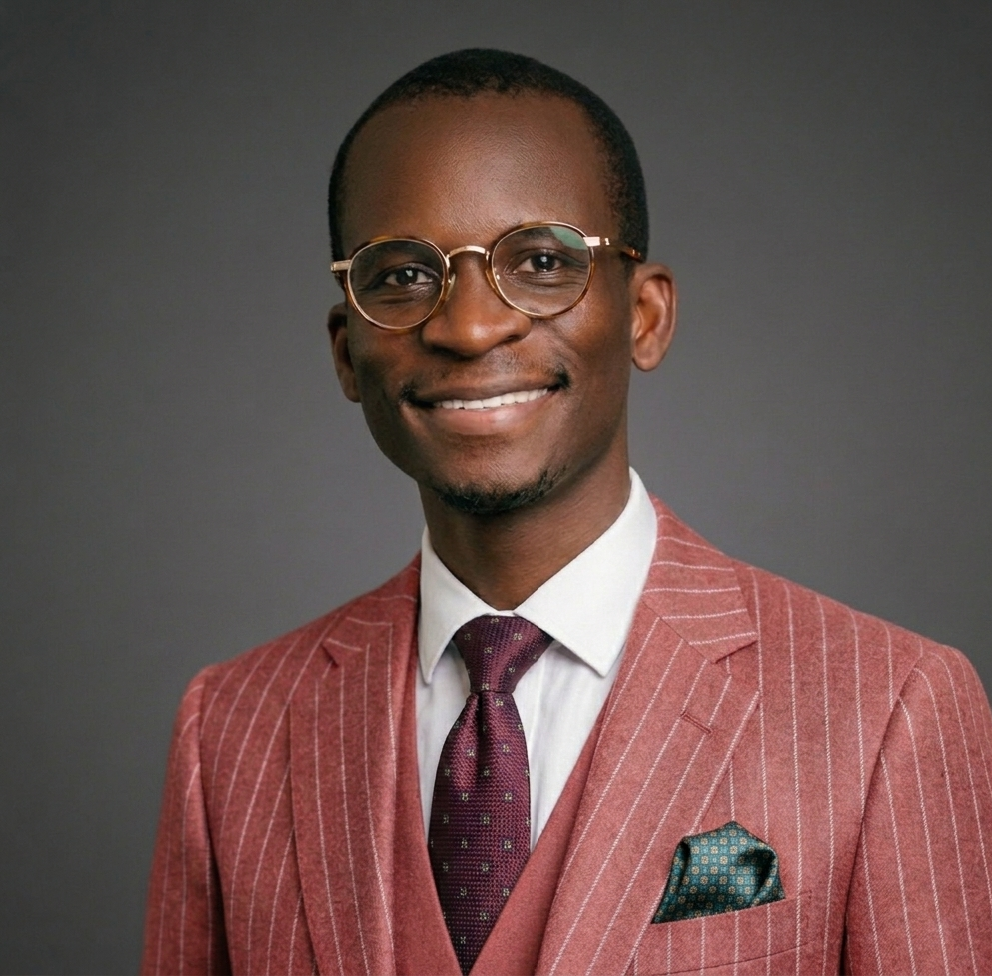
There are moments in international politics when the candidacy of one individual becomes larger than the individual himself. Uganda’s decision to put forward Ambassador Olara Otunnu for the position of Secretary-General of the United Nations is one of those moments. Otunnu has entered an already competitive race to succeed António Guterres, whose term ends at the close of 2026, and Uganda has begun mobilizing diplomatic support for his candidacy. At first glance, this may appear to be another contest among diplomats for one of the world’s most prestigious international positions. But there is a much deeper African question underneath it: what would it mean for Africa if an experienced Ugandan diplomat became Secretary-General of the United Nations, and what would Africa actually gain from such a victory? The answer cannot be reduced to national pride. The Secretary-General is not simply a ceremonial representative of the international community. The office sits at the intersection of diplomacy, peace and security, humanitarian action, international development and multilateral negotiation. The Secretary-General is also expected to exercise political judgement in crises where the interests of major powers frequently collide with the principles of the UN Charter. Consequently, when an African country puts forward a candidate for the position, the question should not simply be whether that individual is qualified. The larger question is whether the candidacy represents a coherent African diplomatic project. Uganda’s Otunnu bid therefore deserves to be examined not only as a Ugandan campaign but as a test of Africa’s capacity to define, coordinate and pursue its interests within the international system.
The first point that deserves recognition is that Olara Otunnu is not an unknown figure within the United Nations system. His career has included senior diplomatic and international responsibilities, including service as Uganda’s representative at the United Nations and later as the UN Secretary-General’s Special Representative for Children and Armed Conflict. Historical UN records document his diplomatic role representing Uganda, while UN Security Council records from his later period at the United Nations demonstrate the extent to which his work became connected with international debates concerning children affected by armed conflict. This background matters because the Secretary-General’s office requires familiarity with the machinery of multilateral diplomacy. The holder of the office must understand the language of international negotiation, the politics of the Security Council, the relationship between the General Assembly and the Secretariat, the institutional limitations of the UN and the realities confronting countries affected by war. Otunnu therefore enters the race with an unusually relevant professional background. His candidacy is not simply that of a national politician seeking an international title. It is the candidacy of someone who has previously operated inside the international system at a senior level. That experience could become one of his principal strengths.
But experience alone does not determine the outcome of a UN Secretary-General contest. The Secretary-General is appointed by the General Assembly upon the recommendation of the Security Council, meaning that the politics of the permanent members of the Security Council inevitably matter. This is where the complexity begins. The five permanent members—China, France, Russia, the United Kingdom and the United States—possess veto power. A candidate can therefore enjoy broad support among smaller and medium-sized states and still face formidable obstacles if one or more permanent members oppose the appointment. The contest is consequently not merely a popularity competition among UN member states. It is a highly structured diplomatic process in which regional support, great-power calculations, geopolitical relationships, personal credibility and the candidate’s perceived ability to work across political divisions all matter. This reality means that Uganda’s campaign cannot simply ask African countries to support an African candidate. It must persuade governments across different geopolitical blocs that Otunnu could operate effectively in an international environment where the interests of major powers frequently diverge.
That is why the Otunnu candidacy raises an important question about African diplomatic coordination. Africa has 54 UN member states and therefore possesses considerable collective voting weight in the General Assembly. Yet numerical strength does not automatically become political influence. Fifty-four governments do not necessarily speak with one voice. African states have different strategic relationships with China, Russia, the United States, European countries, the Gulf states and other international actors. They also have different economic interests, security priorities and foreign-policy traditions. The African Union has repeatedly sought stronger continental coordination in global affairs, but translating common declarations into coordinated diplomatic action remains difficult. Otunnu’s candidacy therefore presents an opportunity to ask whether Africa can turn its numerical presence at the United Nations into coherent political influence. If African governments support different candidates, the continent’s voting power becomes fragmented. If they coordinate behind a candidate and negotiate collectively with other regional groups, Africa potentially becomes a much more consequential diplomatic actor.
This leads to a fundamental distinction between an African candidate and an African agenda. Having an African Secretary-General would certainly possess symbolic importance. It would demonstrate that leadership of the world’s principal multilateral organisation is not permanently concentrated outside Africa. But symbolism alone cannot transform the international system. The more important question is what an African Secretary-General would do with the office. Would the office prioritize reform of the international financial architecture? Would it strengthen African participation in peace and security decision-making? Would it push more strongly for reform of the Security Council? Would it challenge structural inequalities in global governance? Would it advocate for greater representation of developing countries in institutions that make decisions affecting the global economy? Would it strengthen the UN’s capacity to respond to conflicts that receive less international attention than crises in strategically important regions? These are the questions that should accompany the discussion of an African candidacy.
Africa’s historical complaint about the international system is not simply that Africans are underrepresented in senior positions. It is that the institutions of global governance were largely designed during a period when much of Africa did not possess political sovereignty. The United Nations was created in 1945, when colonialism still shaped much of the African continent. The political map of the world has changed dramatically since then. Yet the institutional architecture of global power has changed much more slowly. Africa has grown from a continent largely under colonial rule into a continent of sovereign states with enormous demographic, economic, environmental and geopolitical importance. Nevertheless, Africa remains without a permanent seat on the Security Council. This contradiction is increasingly difficult to ignore. An African Secretary-General would not solve the representation problem, but the candidacy could provide a platform from which the broader question of institutional reform is discussed.
The Security Council question is therefore inseparable from the Otunnu question. Africa’s demand for permanent representation on the Council has existed for decades, and the African Union’s Ezulwini Consensus has articulated the continent’s position on reform. The central argument is that a reformed Security Council should reflect contemporary geopolitical realities rather than the distribution of power that existed in 1945. Africa is not asking merely for an honorary seat. It seeks meaningful representation in the institution that makes some of the most consequential decisions concerning international peace and security. A successful African Secretary-General could potentially amplify this discussion, although the Secretary-General alone cannot reform the Security Council. Reform requires member states, particularly the permanent members, to negotiate and ultimately approve institutional changes. Nevertheless, occupying the Secretary-General’s office could give Africa additional diplomatic visibility in these debates.
There is also a question of peace and security, and this is perhaps where Otunnu’s background becomes especially relevant. His previous UN responsibilities included children and armed conflict, an area directly connected to some of Africa’s most painful experiences. Across the continent, armed conflicts have produced displacement, destroyed schools and hospitals, disrupted economies and exposed children to severe insecurity. Sudan, the Democratic Republic of Congo, the Sahel and other conflict-affected regions demonstrate that international peace and security remains a central African concern. An African Secretary-General with extensive experience in conflict-related diplomacy could potentially bring particular sensitivity to these issues. But Africa should not expect miracles. The UN Secretary-General cannot simply order armed groups to stop fighting. The office operates within political constraints created by member states. The effectiveness of any Secretary-General therefore depends partly upon diplomatic credibility, cooperation from governments and the willingness of powerful states to support UN action.
There is an additional historical complexity that should not be ignored. Otunnu’s relationship with the Ugandan government has not always been politically uncomplicated. During his period as UN Special Representative for Children and Armed Conflict, his reporting and public positions concerning Uganda generated strong disagreements with the government of President Yoweri Museveni. UN records from 2003 document Uganda’s objections to aspects of Otunnu’s reporting on children and armed conflict. The political significance of the current situation is therefore considerable. A government that previously had serious disagreements with Otunnu is now backing his candidacy for one of the highest diplomatic offices in the world. Recent reporting has described President Museveni as actively supporting the campaign, while Otunnu himself has said the endorsement came as a surprise. This history does not automatically weaken the candidacy. Indeed, it makes the story more interesting. International diplomacy is full of former political opponents who eventually find areas of national interest on which they can cooperate. The fact that Uganda is now campaigning for Otunnu demonstrates that foreign policy can sometimes transcend domestic political disagreements when a government perceives a larger national or strategic opportunity.
This development also raises a broader question: can Uganda turn an individual candidacy into a national diplomatic asset? A successful campaign requires more than announcing a candidate. It requires sustained engagement with governments, regional organisations, diplomatic missions and international institutions. Reports indicate that Uganda has already been undertaking diplomatic outreach, including engagement with Security Council members, and that former Prime Minister Ruhakana Rugunda has been assigned a role in the international campaign. This suggests that Kampala understands the contest requires organised diplomacy. The challenge will be maintaining momentum. UN campaigns can last months and require persistent engagement across capitals. Governments change positions. Regional blocs negotiate. Candidates withdraw. New candidates emerge. Endorsements may be exchanged for support on unrelated diplomatic questions. The campaign must therefore operate with patience and strategic discipline.
There is also the question of regional politics within Africa. An African candidate does not automatically receive unanimous African support. Regional groups can have competing interests, and countries may support candidates for reasons extending beyond the candidate’s qualifications. Africa’s diplomatic landscape includes the African Union, the East African Community, ECOWAS, SADC, IGAD and the Arab and North African dimensions of continental politics. A Ugandan candidate must therefore build bridges across geographical and political divisions. East African support alone would not be sufficient. Neither would support from sub-Saharan Africa alone. The strongest African candidacy would need to become continental in character. This is where Uganda’s campaign faces its greatest strategic test: can Kampala persuade African capitals to view Otunnu not merely as Uganda’s candidate but as a candidate capable of representing broader African interests?
The answer will depend partly upon how the campaign defines itself. If the message is simply, “Uganda deserves the position,” the campaign may struggle to generate continental enthusiasm. If the message becomes, “Africa deserves a stronger voice in global governance, and Otunnu offers the experience, independence and diplomatic capacity to advance that objective,” the political proposition becomes much broader. There is a significant difference between national candidature and continental candidature. The first seeks prestige for a country. The second seeks strategic influence for a continent. Uganda should therefore be careful not to confuse national pride with continental diplomacy. If Otunnu becomes Secretary-General, Uganda would undoubtedly gain enormous diplomatic prestige. But the larger African benefit would come from using that moment to advance structural reforms that extend beyond Uganda.
This brings us to Africa’s relationship with the United Nations itself. For many African states, the UN remains indispensable. The organization provides humanitarian assistance, supports peace operations, facilitates international negotiations, monitors elections and human rights in various contexts, and provides platforms through which smaller states can participate in global diplomacy. Yet African governments have also criticized aspects of the UN system, particularly the unequal distribution of power within the Security Council and the inadequacy of international responses to some African crises. The continent therefore has a complicated relationship with the organization: it needs the UN, but it also wants the UN to change. An African Secretary-General would inherit this contradiction. He or she would be expected to defend the credibility of the institution while simultaneously recognizing legitimate criticisms of its structure.
The central challenge would therefore be independence. A Secretary-General cannot simply become the representative of his or her home country. Once appointed, the Secretary-General is an international official. This distinction is essential. If Otunnu were appointed, he would have to serve the UN Charter rather than Uganda’s foreign-policy interests. Uganda would have to accept that distinction as well. The greatest test of the candidacy would come when the Secretary-General’s responsibilities conflicted with Kampala’s preferences. A genuinely successful Secretary-General would need to demonstrate that he could disagree with the government that nominated him when the principles and responsibilities of the UN office required it. That independence would ultimately strengthen, rather than weaken, Uganda’s diplomatic reputation.
The question of independence is particularly significant because the UN Secretary-General frequently operates in politically sensitive situations. The office may have to criticise governments, negotiate with armed actors, advocate for civilians and make statements that anger powerful states. A candidate’s past political relationships will therefore be examined carefully. The fact that Otunnu has previously taken positions that generated disagreement with the Ugandan government could paradoxically become evidence of independence, depending upon how international governments interpret his record. A Secretary-General who is perceived as merely representing the interests of the government that nominated him would have limited credibility. A Secretary-General who demonstrates independence from all governments could potentially exercise much greater diplomatic authority.
There is another major question: what would an Otunnu victory mean for Uganda itself? The symbolic benefit would be enormous. Uganda would become associated with one of the highest offices in international diplomacy. Ugandan diplomats, universities, researchers and civil society organizations could potentially gain greater visibility in global discussions. The country’s diplomatic profile would rise considerably. But there could also be risks. Once a Ugandan national occupies the UN Secretary-General’s office, expectations from Ugandans would be extremely high. Citizens might expect him to advance Uganda’s interests directly. That would not be the Secretary-General’s mandate. Uganda would therefore need to understand the distinction between national representation and international responsibility.
The potential African benefit could nevertheless be substantial. An African Secretary-General could use the visibility of the office to elevate issues that have historically struggled to receive sustained global attention. Debt, climate finance, food security, African industrialization, global health, peacekeeping, migration, youth employment and reform of international financial institutions could all receive greater diplomatic attention. But again, the office would not automatically solve these problems. The value would lie in agenda-setting, convening power, moral authority and diplomatic influence. The Secretary-General can bring governments together, encourage negotiations, appoint envoys, mobilize international attention and use the platform of the UN to frame global debates. Those powers are significant even though they are constrained.
The economic dimension should also be considered. Africa’s development challenges are increasingly connected to the international financial system. African countries face questions concerning debt sustainability, access to capital, commodity dependence, infrastructure financing, technology transfer and climate finance. The UN is not a global bank and cannot simply restructure every African debt obligation. Nevertheless, the Secretary-General can help shape the international political conversation around development. An African Secretary-General could potentially give greater visibility to the argument that development should be measured not simply through aid flows but through structural changes in the international economic system.
This would also connect to Africa’s climate diplomacy. African countries contribute relatively little to historical global greenhouse-gas emissions compared with major industrialized economies, yet many African societies face severe consequences from climate variability, droughts, floods and environmental degradation. The Secretary-General has an important role in maintaining global attention on climate commitments. An African holder of the office could potentially articulate the developmental consequences of climate change from the perspective of countries whose populations are simultaneously seeking industrialization and climate resilience. The challenge would be to balance environmental responsibility with Africa’s legitimate demand for development.
There is, however, a danger in placing too much expectation upon the identity of the Secretary-General. An African Secretary-General is not automatically an Africanist Secretary-General. Nationality does not determine political philosophy. A person can be African and still support policies that African governments oppose. Similarly, a non-African Secretary-General can strongly support African interests. The real issue is therefore not simply where a candidate was born. It is what institutional principles the candidate represents, what agenda the candidate proposes and whether the candidate can exercise independent leadership. Africa should therefore support candidates based on substance as well as symbolism.
That distinction matters because the UN Secretary-General is ultimately a global office. The person who occupies it must speak to Africa, Asia, Europe, Latin America, North America, the Middle East and the Pacific. The next Secretary-General will inherit conflicts and diplomatic crises that extend far beyond Africa. The candidate will need to understand the competition among major powers, the changing global economy, technological transformation, artificial intelligence, climate change, humanitarian emergencies and the evolving nature of warfare. Africa therefore needs a candidate who can represent Africa without becoming confined to Africa. That is a demanding standard.
The Otunnu campaign consequently presents Uganda with an opportunity to demonstrate a more sophisticated form of diplomacy. Rather than treating the campaign as a prestige contest, Kampala could use it to build coalitions around substantive issues. Uganda could ask African governments what they want from the next Secretary-General. It could consult regional organizations. It could develop a clear platform around UN reform, peace and security, development, climate finance and multilateralism. It could present Otunnu not simply as an individual but as a candidate with a defined vision for the international system. Such a strategy would make the campaign more meaningful even if Otunnu ultimately does not win.
And this may be one of the most important points: a diplomatic campaign can produce value even without victory. Countries frequently enter international contests knowing that success is uncertain. The campaign itself creates opportunities to strengthen relationships, understand the positions of other governments and build diplomatic networks. Uganda’s Otunnu campaign could therefore produce long-term benefits if it is conducted strategically. Kampala will meet governments, engage diplomats and discuss global governance. Those relationships can remain useful after the Secretary-General selection has ended. A failed campaign need not therefore be a failed diplomatic strategy.
For Africa, the deeper lesson is that global power is organised through institutions, networks and coalitions. It is not enough for Africa to possess 54 votes at the United Nations. Those votes must be coordinated. It is not enough to demand Security Council reform. African states must maintain a common position. It is not enough to complain about international financial institutions. Africa must develop detailed proposals for reform. It is not enough to criticise the international system. African governments must cultivate diplomats, scholars, negotiators and institutions capable of shaping that system. The Otunnu campaign therefore provides an opportunity for Africa to think beyond personalities and consider the architecture of continental diplomatic power.
There is an especially important lesson here for Uganda. Small and medium-sized states can exercise disproportionate influence when they develop strong diplomatic institutions. Uganda does not possess the military, economic or demographic weight of the world’s major powers. Yet it can nominate a candidate for the UN’s highest diplomatic office. That fact alone demonstrates something about the possibilities of multilateral politics. International institutions provide smaller states with platforms they would not possess in a purely power-based international system. Uganda’s challenge is to use those platforms intelligently.
The campaign also raises a question about Africa’s diplomatic memory. Otunnu’s career spans several generations of international politics. He has witnessed the transformation of the international system from the Cold War era into the post-Cold War period and then into today’s increasingly fragmented geopolitical environment. That historical experience can be valuable. The world of 2026 is not the world of 1991, 2001 or 2011. The international system is becoming more multipolar. China has become a major global power. Russia remains a significant strategic actor. The United States continues to possess enormous influence. Europe is redefining aspects of its strategic role. India is becoming increasingly important. Middle powers are seeking greater autonomy. African states are attempting to increase their collective influence. The next Secretary-General will have to navigate this increasingly complicated environment.
The question, therefore, is not simply whether Otunnu can win. The question is whether Africa can use the candidacy to articulate what it wants from the next phase of global governance. If Africa treats the campaign as merely a Ugandan political achievement, the opportunity will remain narrow. If African governments use it to discuss Security Council reform, development financing, peacekeeping, climate justice, global health, technology and equitable representation, the campaign becomes much larger than one person. It becomes a conversation about Africa’s place in the international system.
Uganda should consequently be prepared for both outcomes. If Otunnu wins, Kampala should resist the temptation to treat the Secretary-General’s office as a Ugandan diplomatic possession. Instead, it should allow Otunnu the independence necessary to succeed as an international civil servant. If he does not win, Uganda should nevertheless preserve the diplomatic relationships developed during the campaign and continue pursuing greater African representation in global institutions. Either way, the campaign can become part of a broader Ugandan foreign-policy strategy.
For Africa, the strategic objective should ultimately be institutional power rather than symbolic representation. One African Secretary-General would be important. But what would be even more important would be a generation of African diplomats capable of competing for senior international positions; African research institutions producing influential global-policy scholarship; African governments coordinating their diplomatic positions; African universities training international negotiators; and African states developing common positions on global economic and security governance. A continent cannot transform its position in the international system through one appointment alone. It must build the institutional capacity to influence international institutions continuously.
That is why the Otunnu candidacy deserves serious attention. It is a Ugandan nomination, but it raises an African question. It asks whether Africa is prepared to compete for leadership rather than merely participate in institutions created elsewhere. It asks whether African states can coordinate their diplomatic power. It asks whether the continent can move from being frequently discussed at international institutions to helping determine what those institutions discuss. And it asks whether an African candidate can occupy a global office without reducing global leadership to continental representation.
The answer will ultimately depend on diplomacy. It will depend on alliances. It will depend on the Security Council. It will depend on regional politics. It will depend on the candidate’s ability to persuade governments that he can serve the entire international community. And it will depend on whether African governments can recognize that the significance of the contest extends beyond the name on the ballot.
The real significance of Uganda’s Otunnu bid may therefore not be whether one Ugandan becomes the next Secretary-General. The deeper significance is whether Africa can use the contest to demonstrate that it is ready to move from representation to influence, from participation to agenda-setting, and from asking for a place at the table to helping determine what is discussed at the table.
Uganda has put forward a candidate.
Now Africa must decide what it wants to put forward with him: a person, a country, or a vision of a more representative international order.
That is the larger question behind the Otunnu campaign.
