

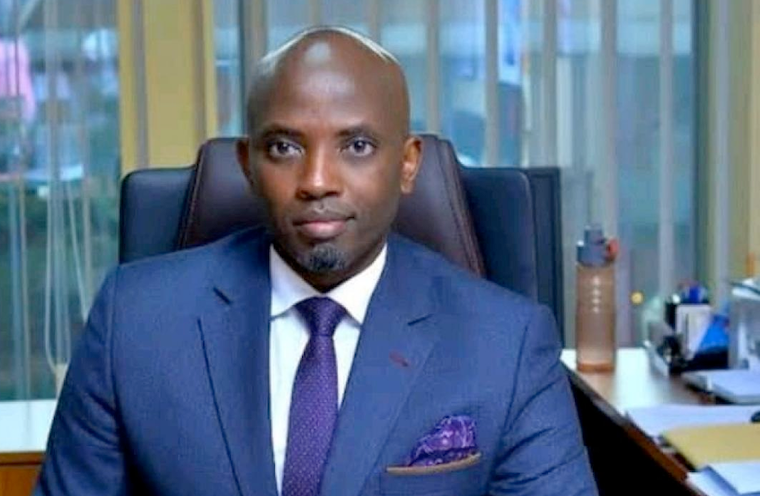
By Paul Kimbugwe UNN TV
Four years ago, on 5th September 2021, I sat alongside Elizabeth Wamala on UNN TV and told Uganda something it wasn’t ready to hear.
We laid out document after document. We played video clips. We asked uncomfortable questions about a man who had just been “arrested” on espionage and immigration charges — an arrest that somehow made headlines on BBC, Al Jazeera, DW, and virtually every major international platform, all at once, as if Uganda had been infiltrated by the world’s most dangerous academic.
We told you then: this arrest is not what it looks like.
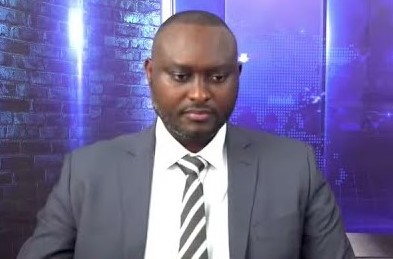
Uganda listened for three days. Then forgot. That is our national tradition.
Today, that forgetting has a price — and it is constitutional.
The Manufactured Rise of a Political Brand
Let me take you back, because context is everything.
Before the arrest, there had been a quiet but visible campaign to introduce Lawrence Muganga onto Uganda’s intellectual and political radar. There was a book — “You Can’t Make a Fish Climb a Tree” — marketed with considerable hype, but which struggled to find genuine traction. There were blog posts and small media placements attempting to build the image of a serious Ugandan-born academic and thinker returning to serve his motherland.
It wasn’t working.
So, something bigger was needed.
What followed was, in our assessment on that September 2021 broadcast, a stage-managed arrest — a carefully choreographed media event designed to do what no book launch or blog campaign could achieve: place Lawrence Muganga’s name, face, and story on every major television screen, locally and internationally, simultaneously.
Think about it. A returning academic. Arrested on espionage charges. In Uganda. Covered by the BBC. Ask yourself when last a Ugandan immigration case received that level of synchronized international media attention. The story wrote itself because it was written to write itself.
On that show, Elizabeth Wamala and I presented documents and footage that raised serious questions about the consistency of his identity claims, his stated history, and the circumstances surrounding his emergence. People were shocked. Some believed us. Many didn’t — or chose not to.
You can revisit that full broadcast here: 🎥 https://www.youtube.com/live/RdA-AjTEVbI?si=1fQrE1tL33Vj8aTd
What the Documents Now Confirm:
Fast forward to May 2026. The President releases a new cabinet list. Number 37 on that list: Dr. Lawrence Muganga — Minister of State for Internal Affairs.
And suddenly Uganda is asking questions it should have asked four years ago.
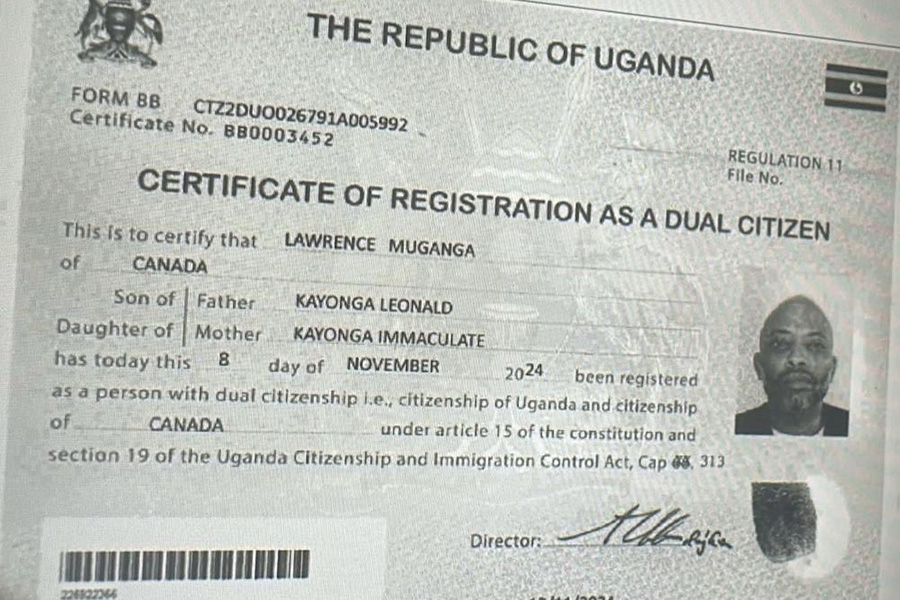
Because attached to this appointment is a paper trail that raises serious legal concerns:
A Canadian passport (No. HG689873) in the name of Lawrence Muganga, issued in Edmonton, valid until January 2026, confirming Canadian citizenship.
A Rwandan passport (No. PCD99993) also in the name of Lawrence Muganga, listing him as a Rwandan national — Umunyarwanda — born in Mukono, Uganda.
A Ugandan Certificate of Registration as a Dual Citizen, dated 8th November 2024, confirming his dual citizenship status between Uganda and Canada.
A Ugandan Diplomatic Passport (No. D00003506), issued 19th February 2026 — just months before the cabinet announcement.
Three countries. Multiple passports. One man being proposed to head the ministry responsible for immigration and citizenship control.
You truly cannot make a fish climb a tree — but it appears someone has been trying very hard.
The Law Is Not Ambiguous
This is not a matter of opinion or political positioning. Section 19D(1) of the Uganda Citizenship and Immigration Control (Amendment) Act, 2009 states in plain language:
“A person who holds the citizenship of another country in addition to the citizenship of Uganda is not qualified to hold any of the offices of State specified in the Fifth Schedule to this Act.”
The Fifth Schedule explicitly lists Cabinet Ministers and other Ministers among the offices barred to dual citizens. The law is mandatory. It is prohibitive. There are no exceptions and no grey areas.
A dual citizen — regardless of their qualifications, intentions, or political connections — cannot lawfully serve as a minister in Uganda.
The petition filed on 28th May 2026 by lawyer and Human Rights advocate Namakajjo Deric Fredric, addressed to the Rt. Hon. Speaker of Parliament, makes this constitutional argument precisely and urgently. It calls on Parliament to decline vetting Muganga unless conclusive proof of Canadian citizenship renunciation is produced first.
Parliament is not a rubber stamp. Article 114 of the Constitution gives it a substantive obligation to verify eligibility — not merely ceremonial approval.
One Credit I Will Claim
I am not a man who says “I told you so” without purpose. But purpose requires honesty.
In 2021, when we ran that broadcast, our analysis pointed toward the Education Ministry as Muganga’s political target. The narrative being built around him — the academic, the intellectual, the educator — was positioning him for a role shaping Uganda’s education policy.
That particular door, I believe, our 2021 exposure helped close. The public scrutiny we raised made that path politically uncomfortable.
What I did not anticipate — and this I acknowledge openly — was that the strategy would simply pivot. That Internal Affairs, of all ministries, would become the new destination. That a man whose citizenship status was already publicly questioned would be proposed to oversee the very institution that governs citizenship and immigration in this country.
That is either an extraordinary act of boldness, or an assumption that Ugandans have, once again, forgotten.
Saturday, 30th May 2026 — We Return
Because of the volume of calls, messages, and public demand we have received since the cabinet list was published, UNN TV management has taken the decision to replay the original 2021 broadcast — “The Truth Behind the Arrest of Lawrence Muganga” — live this Saturday, 30th May 2026.
This is not a new show. It is a revisit of what was already said, already documented, and already presented to this nation — four years before it became a constitutional question.
The documents were there. The inconsistencies were there. The questions were there.
Uganda was not ready.
Perhaps now, with a cabinet appointment, a legal petition, multiple passports, and a law that speaks in the clearest possible terms, Uganda is ready.
Watch with us. Share this article. Ask your Member of Parliament what they intend to do before the vetting begins.
The Constitution does not have a short memory. It is time we stopped having one too.
Paul Kimbugwe is a Governance and Policy Evangelist and host at UNN TV.
